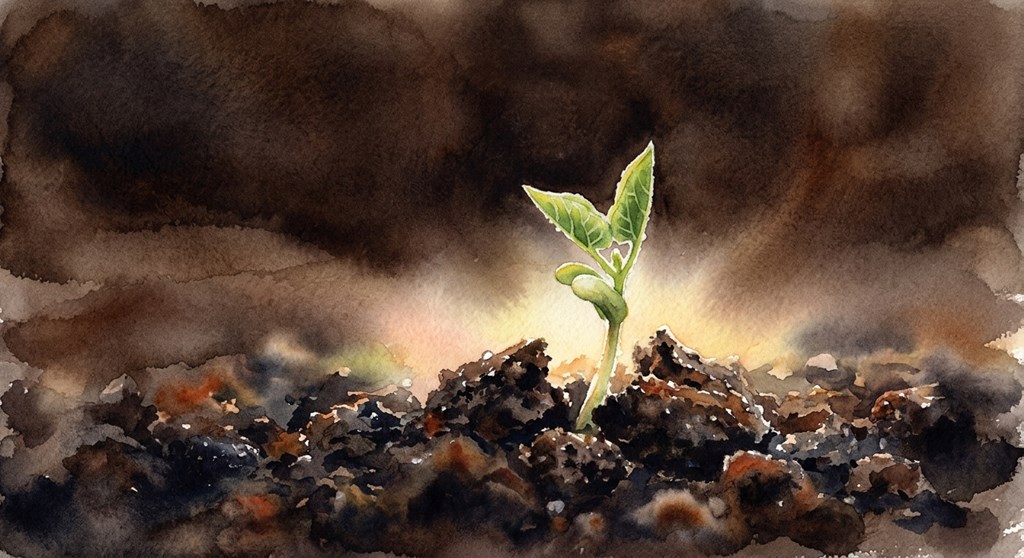

Every year, shiso comes up in my field without my sowing a single seed. It grows from seeds that dropped the year before. When the weather warms up around May, the seedlings appear. By September, flower spikes rise and bloom, and soon the plants set seed. Those seeds fall to the ground on their own and sprout again the next spring. Before the cold comes, the plant has already prepared for the year ahead. Watching my field through the seasons, I feel that plants live in step with the rhythm of the earth.
Every spring, something changes. The soil warms, green shoots push up, and people feel lighter. Most of us explain this with the sun and the tilt of the earth. But in 1949, the Japanese thinker Mokichi Okada (1882–1955) offered a very different picture: the earth itself is breathing.
Everything Breathes
We all know that animals breathe. Okada went further. He wrote that plants, minerals, and in fact everything in the world breathes — and so does the earth. He admitted this might sound strange at first, but asked readers to follow his reasoning.
One Breath a Year
According to Okada, the earth takes one breath each year.
Spring is when the earth begins to breathe out. The out-breath grows stronger until it peaks in summer. Then the earth begins to breathe in, and that in-breath reaches its peak in winter.
Like a person’s breath, the earth’s breath is warm. Okada saw it as heat rising from inside the earth. When this warm breath grows strong in spring, living things begin to grow. Grass and trees sprout first. Everything reaches upward, and people feel cheerful and lively.
As summer goes on, plants grow thick and full. But once the earth starts to breathe in, plants wither, everything turns downward, and people become calmer. That, he said, is simply the way nature works.
The Breath That Feeds Plants
Here is where Okada’s idea connects to farming. He taught that the earth’s breath is the life energy of the ground — what science calls nitrogen. That is why plants grow.
In his view, this nitrogen keeps rising into the air, collects up high, and returns to the soil with the rain. This, he said, is nature’s own nitrogen fertilizer.
Why More Fertilizer Is Not the Answer
From this point of view, taking nitrogen from the air to make fertilizer is a mistake. (Chemical nitrogen fertilizer came into wide use in Germany during World War I.)
Okada did not deny that it works at first. Harvests do go up for a while. But if farmers keep using it for years, he warned, the soil suffers from “nitrogen poisoning” and becomes thin and tired. Too much nitrogen dulls the soil’s own power.
He said it made sense in wartime, when a country needed more food quickly. But once peace came, it should have been stopped.
The Sun and the Moon Breathe Too
Okada did not stop at the earth. He saw the sunspot cycle, which is said to peak about every eleven years, as the sun’s breathing. He also saw the moon’s 28-day cycle of waxing and waning as the moon’s breathing. To him, the whole universe moved in rhythm.
Living in Step with the Rhythm
Whether or not you accept every part of Okada’s view, his main point is easy to see in any garden. Plants sprout, grow, bloom, set seed, and rest, following the seasons. For Okada, good farming meant working with that rhythm, not against it.
His original essay is short. If you would like to read his own words in Japanese, you can find it below.
Read the Original
地球は呼吸する (The Earth Breathes, 1949)
https://meshiya.jp/tpron863/