

Working in my fields, I am grateful for Japan’s four seasons. Spring brings nanohana (rapeseed) buds and peas. Summer brings eggplant, cucumbers, green peppers, and kabocha squash. Autumn brings cabbage and other leafy greens, and winter brings daikon radish and carrots. In warmer countries, perhaps almost anything grows all year round. In Japan, each season has its own vegetables.
A seed sprouts, flowers, bears fruit, and leaves new seeds. Sow them the next year, and the cycle begins again. Right now I am planting onions that will stay in the ground through winter and be harvested next year.
Mokichi Okada saw Japan’s clear four seasons as one clue to the role Japan should play in the world.
In 1950, less than five years after World War II ended, people in Japan often talked about “rebuilding Japan.” But rebuilding it into what kind of country?
In an essay published on New Year’s Day that year, the Japanese thinker Mokichi Okada gave a clear answer. Japan, he wrote, should become a peaceful nation of art. And to find that path, the Japanese first needed to understand what made their country unique.
Know Your Own Country
There is an old saying: know yourself. Okada believed the same was true of a nation. A people must know their own country. When Japan was closed off from the world, this may not have mattered much. But now that everything had become global, it was essential to understand what role Japan should play.
If the Japanese had truly understood this, he wrote, the country would never have suffered the tragedy of defeat.
A History Ruled by Force
Without knowing its role, Okada argued, a nation cannot set a true course. Before the end of the war, a small group of military leaders held absolute power in Japan. Ordinary people had no voice, and the few in power finally led the country into a reckless war.
Looking further back, he saw a long history of internal wars that hardly ever stopped. Behind the noble-sounding name of bushido, the way of the samurai, those most skilled in battle gained power, and whoever won the wars ruled the age. This long line of force, Okada wrote, was finally cut by the shock of defeat. Japan could not find its true path as a peaceful country unless the whole nation understood what that meant.
More Than “Rebuilding”
So what should Japan do now? Okada’s answer was to see the country with fresh eyes. By nature, he wrote, Japan was the very opposite of a feudal military state. It should be a peaceful nation of art. This was Japan’s true role.
People often spoke of “rebuilding Japan,” but to Okada, the words alone meant little. Taken literally, they described only a democratic country without an army. That was welcome, of course. But Japan should go further: recognize its special role in the world, and contribute to the well-being of all people. That, he said, was the true role of a new Japan.
Seasons, Scenery, and Skillful Hands
Okada then gave his reasons.
First, there is Japan’s natural beauty. He believed its scenery was probably unmatched anywhere in the world, and visitors from abroad always praised it.
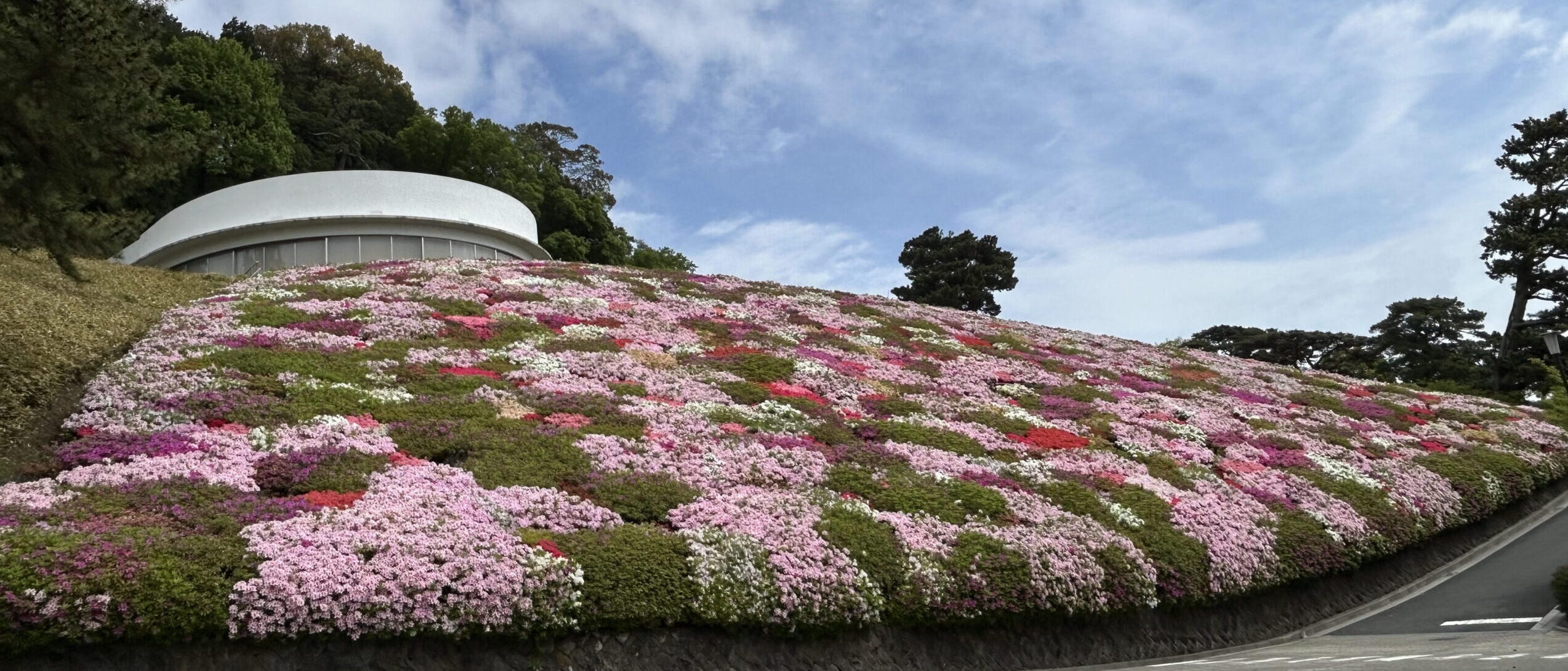
Next, there are the four clear seasons. Mountains, rivers, trees, and flowers change with every season. The haiku poet Takahama Kyoshi, after a long journey abroad, said that no other country had seasons as clear as Japan’s. Since haiku sings of the seasons, he added, true haiku could not be written anywhere else. Japan was also said to have an unusually rich variety of plants, flowers, fish, and shellfish.
Finally, the Japanese are skilled with their hands, which suits them to art and craftwork. The best proof, Okada wrote, is that even through a past filled with war, Japan produced many fine works of art. Their skill still amazes people today.
A Park for the World
From all this, Okada wrote, Japan’s role becomes clear: make the whole country a park for the world, and keep working at the arts until they reach the highest level. In other words, Japan should make tourism and arts and crafts its two great national goals.
This would help lift people’s thinking everywhere, and bring the world fresh enjoyment and comfort. In a word, Japan should become a highly cultured nation of art.
From Conflict to Art
Never before, Okada wrote, had people feared war and longed for peace so deeply. War, he believed, comes from the fighting spirit that still lives strongly in human beings. We talk about culture, but we have not yet outgrown our primitive side.
The answer is to change where humanity’s eyes are turned, and the place to turn them is art. He put it simply: turn the hell of conflict into the heaven of art. Peace kept by the threat of weapons lasts only for a while. Lasting peace needs a change in the way people think, at the very root.
That is why Okada did not want to speak simply of “rebuilding Japan,” but of “rebuilding a new Japan.” For him, the only path forward was to become a nation of art.
Who Was Mokichi Okada?
Mokichi Okada (1882–1955) is known today for a farming method that uses no fertilizer at all, and for a large body of writing on health, art, and how people ought to live. In 1952, he opened the Hakone Museum of Art.
Read the Original
The full text, written by Okada in Japanese in 1950, is available on meshiya.jp.
