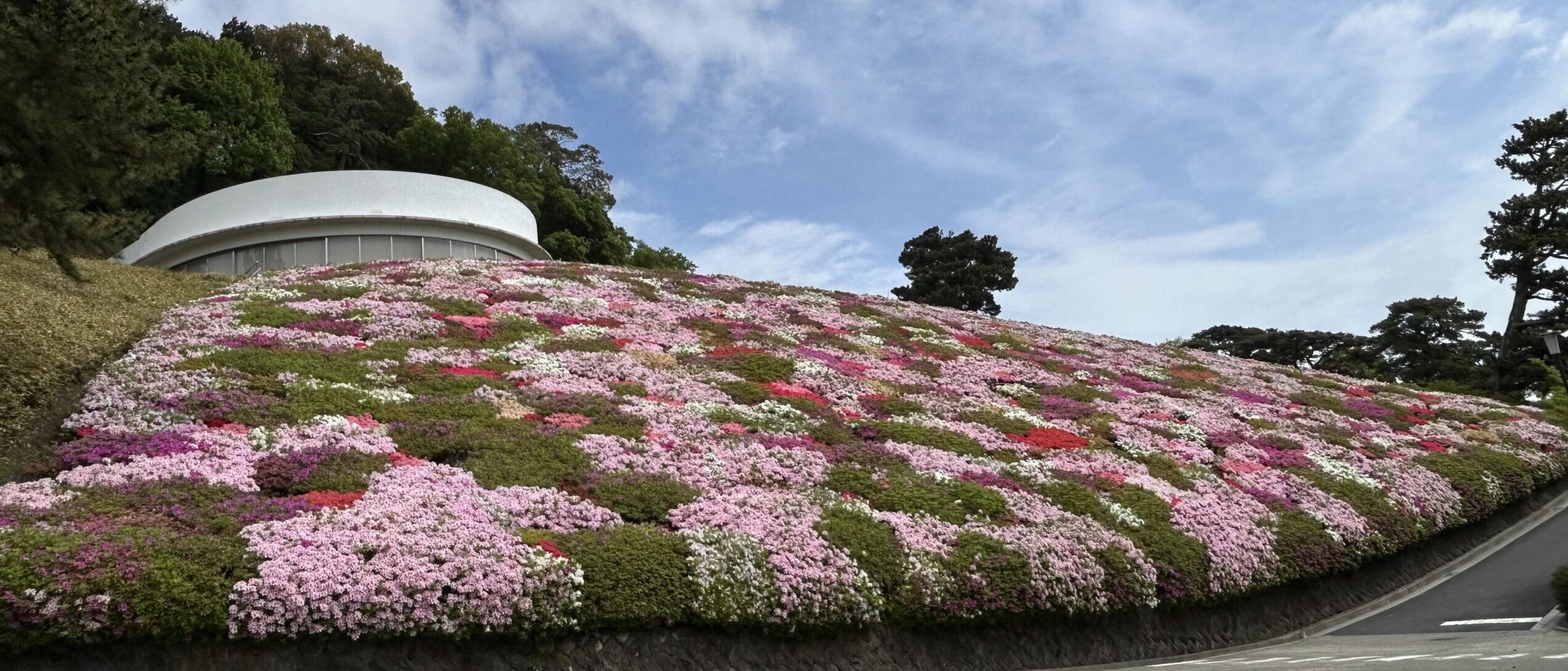



Now and then I head out to the mountains or the sea, usually alone or with my mother.
Standing before a beautiful view, the same thought always rises in me: it seems a waste to keep this to myself. I wish more people could see it.
It wasn’t always this way. Reading Okada’s writings over the years, I found the feeling growing in me on its own. Perhaps a heart that delights in others’ joy is something that can be cultivated.
Why Some People Just Feel Good to Be Around
You know the feeling. Some people leave you lighter than they found you. Nothing dramatic happens — you simply come away in a better mood than when you arrived.
A Japanese thinker named Mokichi Okada (1882–1955) thought this quality mattered far more than we realize. Not just for our own lives, he said, but for society as a whole.
The Ripple Effect
His reasoning was simple. Meet someone pleasant, and you become a little more pleasant yourself. You carry that into your next encounter, and it spreads — person to person, outward.
Follow that far enough, Okada suggested, and you arrive at something remarkable: a society that feels good to live in. Conflict decreases. Crime decreases. What emerges, in his words, is a kind of paradise of the spirit.
And the best part? It costs nothing. No money, no effort, no waiting. You could begin this moment.
Which sounds easy — and, as everyone knows, it isn’t.
You Can’t Fake It
Here is the catch. Surface politeness doesn’t work.
What makes a person genuinely pleasant to be around, Okada said, is sincerity that seeps out from within. It depends entirely on what a person actually holds in their heart. And at the root of it lies love directed toward others rather than oneself.
He wrote candidly about his own case. From a young age — and he admitted it was odd to say so himself — he was rarely resented or disliked wherever he went. People tended to warm to him instead.
Thinking about why, he landed on one thing: he consistently put his own gain and satisfaction second, and kept his attention on what would please and satisfy others. Not out of moral duty or religious teaching, he said — it simply happened naturally. It was his character. A kind of hobby, even.
When Caring Costs You
This trait came at a price, and Okada didn’t hide it.
Seeing someone suffering from illness, he couldn’t sit still. He had to try to help. And when they recovered and were glad, their gladness transferred to him and he felt happy himself.
But that same impulse caused him real trouble. When a case was clearly hopeless, the sensible thing was to step back early. Instead, when the patient or the family clung to him, he forgot his own interests entirely, traveling long distances again and again, spending his time and his money. Sometimes it ended badly anyway — leaving people disappointed, and leaving him resented and complained about.
Each time, he would tell himself he ought to be more hard-hearted. He never managed it.
The Same Trait, Building Something

Looking back, Okada saw that this very character had helped him build what he built — including the art museum he founded. He concluded that such a nature must have been given to him for a reason.
He offered a small example. Come across a fine work of art, or a truly beautiful landscape, and enjoying it alone feels hollow to him — even faintly wrong. What rises instead is the wish to let as many people as possible see it and take pleasure in it.
That, he said, was what satisfied him most: not simply enjoying something himself, but delighting in the delight of others.
Read the Original
This is a short introduction. The full text — written by Okada in Japanese in 1954 — is available on meshiya.jp.
👉 感じの良い人(meshiya.jp)
