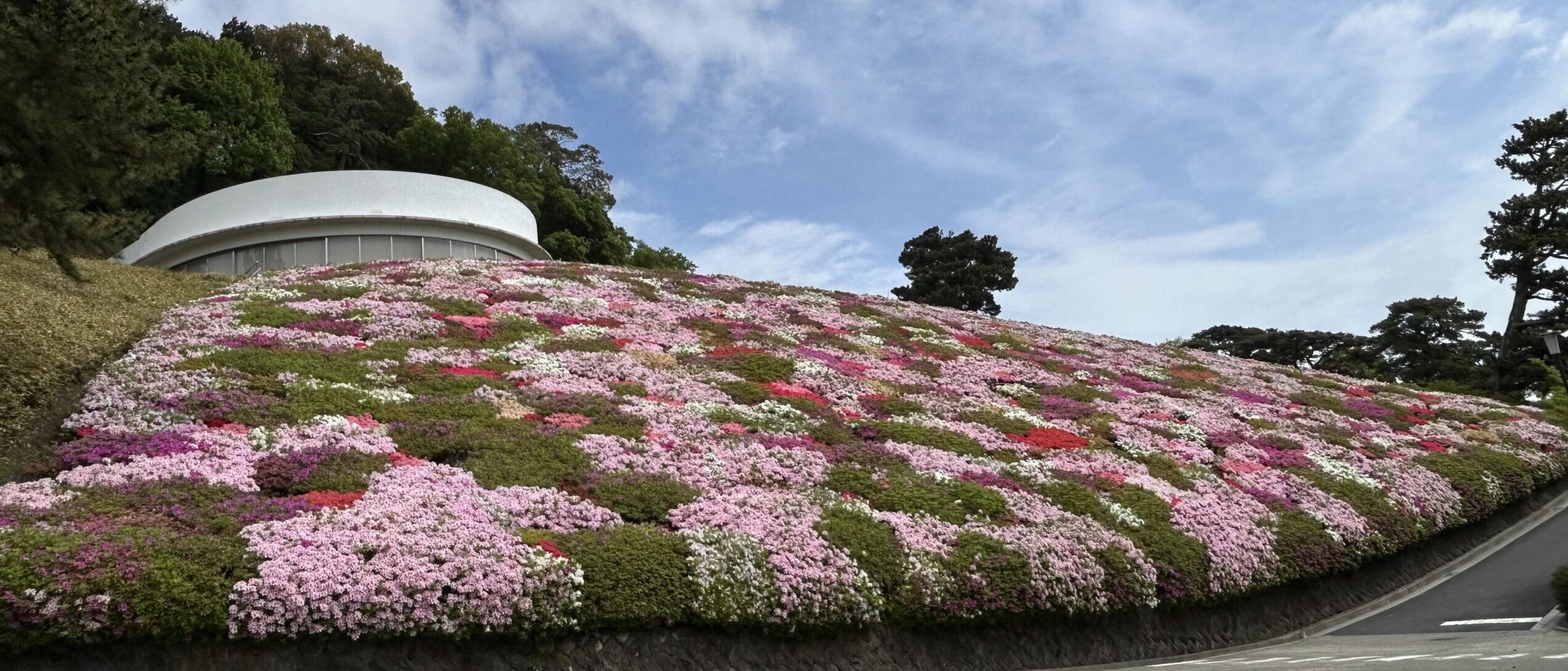



I have emphysema, and for a long time even walking was difficult. Whenever I did manage to walk, I could only stare down at my feet — I never had the room to look up at the sky.
Lately, I’ve been able to take short walks again. And something curious happens.
I’ll spot an unusual plant along the way and think, “How beautiful.” Then I notice the sky is a brilliant blue, and the air feels wonderful. Come to think of it, the flowers in that garden are lovely too. And look — I managed to walk this far today. How grateful I am for that. One small joy, and suddenly my eyes are drawn to the next, and the next.
Mokichi Okada once said, “When you rejoice, joyful things will come to you.” Slowly, I’m beginning to understand what he meant.
My body is far from perfect. But each time I feel grateful, another small joy comes into view. Gratitude, I’ve come to believe, has that kind of power.
When we live with a thankful heart, we become calmer, more open, and more able to see the good around us. But when we focus only on what feels unfair or missing, it changes the way we see life.
This idea is close to the teachings of Mokichi Okada, a Japanese thinker of the 20th century. He expressed it in a simple saying:
“When you rejoice, joyful things will come to you.”
For Okada, gratitude was not only a feeling. It was a way of living that could shape the mind, deepen peace, and open the way to a better life.
Read the original Japanese text of this essay

Read a related Japanese essay
