

Twelve or thirteen bales from a single tan of land — and with no fertilizer at all. Honestly, I could hardly believe it.
But the part about taste, I understand completely. I used to hate green peppers, until I tried one grown by a natural farming grower. It was so good I couldn’t stop — and I’ve enjoyed them ever since.
A Rice Harvest That Doubled — Without Fertilizer
Readers of Masanobu Fukuoka’s The One-Straw Revolution know the idea: farming can work with nature instead of against it. Here is one family’s story that shows what that can look like in practice.
From Six Bales to Thirteen
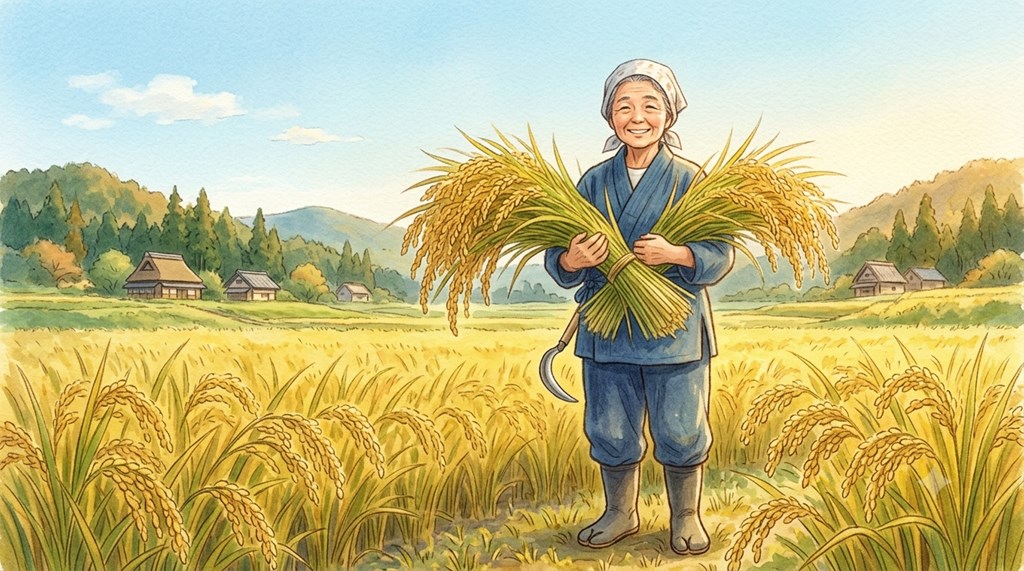
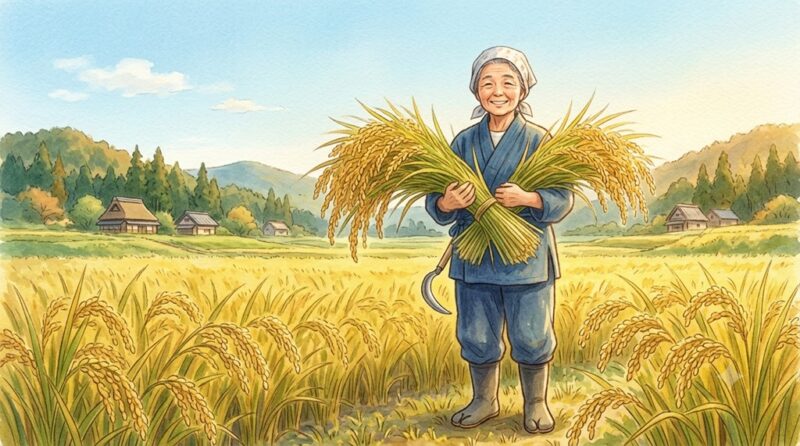
In 1977, a woman began growing rice the natural way — no chemical fertilizers, no pesticides. For the first two or three years, her field yielded about six bales per tan (roughly a quarter-acre).
At the time, growers were encouraged to use something called “B compost.” She used it faithfully for years, but her yields never rose, and weeds kept coming back. Then she heard that this compost might be doing harm — and she stopped using it.
The change was striking. The weeds all but disappeared. And within two or three years, her harvest had climbed to twelve or thirteen bales — roughly double.
When the Officials Bowed Their Heads
Her yields were so high that officials from the agricultural cooperative came to see how she did it. What they found: rice stalks grown large, ears so heavy with grain they bent down to touch the ground, and a taste noticeably sweet.
The cooperative had spent years teasing her for turning to natural farming. This time, the story goes, they bowed their heads.
Interestingly, she hadn’t started alone. Four fellow believers and one relative had begun natural farming with her. But only she stopped using B compost; the others kept on with it — and their yields stayed at six or seven bales. The difference lay in that single choice.
Food That Heals
She had a wish: to share safe, wholesome rice — especially with the sick — at a price anyone could afford.
Her child once carried some of her rice, cooked down into a thin gruel, to an elderly neighbor who was unwell.The old man, who had been unable to keep anything down, drank the whole bowl — and afterward began to recover. Another neighbor, given a little of the rice, found it so good that he wanted to buy it for himself.
She used to say that growing rice depends on the heart of the person who grows it. She farmed on, actively, until the age of 88.
Read the Original
This is a short introduction to a reader’s account, told in Japanese, on meshiya.jp.
👉 一反に12、3俵取れたお母さんの自然農法米作り(meshiya.jp)