

When I first took up natural farming, the farm where I worked used cow manure compost. At the time it seemed only natural, and we relied on potting soil and organic fertilizers as well.
But as the years passed, insect damage grew worse. For all we called it compost, it carried a great deal of fertilizer. So we stopped using it and turned to compost made from grass cut around the town — only to find weed seeds and litter mixed in.
After that long detour, I now add almost nothing to my field. It has taken me years to arrive at the very thing Okada described from the beginning. I was the one dazzled by short-term results.
Do Honest People Really Finish Last?
It’s an old saying, and a discouraging one: nice guys finish last. Honesty doesn’t pay. You have to be willing to bend the truth if you want to get ahead.
A Japanese thinker named Mokichi Okada (1882–1955) had heard it too — and he flatly disagreed. From his own experience, he wrote, he could guarantee that it simply isn’t true.
Two Ways of Looking
His argument turns on a distinction: there are two ways to look at anything that happens in human life. One is the short view. The other is the long view.
Most people, Okada observed, judge good and bad by short-term results. We watch someone deceive their way to success, feel dazzled by it, and conclude that honest people lose out.
But look further ahead, he said, and the picture reverses. Sooner or later the deception comes apart, the shame arrives, and the whole thing collapses. Meanwhile the honest person may be misunderstood for a time, may lose out, may be put at a disadvantage — but as the days pass, the truth of who they are becomes clear.
He was blunt about how certain he found this. Both outcomes, he said, are as close to inevitable as anything gets.
He Tried Lying. It Didn’t Work.
Okada wrote about testing this himself, and the story is oddly endearing.
He was, by his own admission, incurably honest — the sort of person who simply cannot lie. In his younger years, people told him plainly that someone so honest would never make it, and that he had better learn to lie skillfully if he wanted to get anywhere.
So he tried. He gave it a real effort.
It was unbearable. Life turned dark; every day felt miserable. And unsurprisingly, the results were no good either. He was a merchant then, a line of work where a bit of bargaining and bluffing supposedly helps — and still it went badly.
Finally he decided to stop, and to go through life as the honest person he actually was.
The results, he said, surprised him. His standing in the business world rose. Success came steadily, and he built up considerable assets. (He later lost them, overextending himself just as a financial panic hit — which is what led him into religious life.)
But the honesty stayed. Through misunderstanding, criticism, even persecution, he kept to it — and his credibility, he wrote, never once slipped. He remained convinced that honesty was the reason.
Where Else This Applies
Okada then turned the same lens on other fields, and here his examples get interesting.
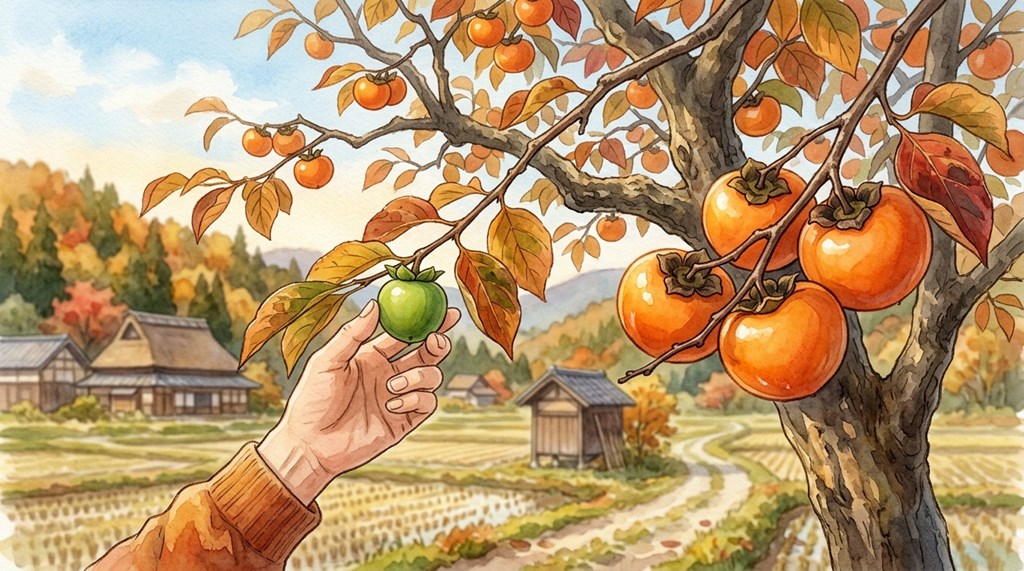
Politics. A politician strains to grab power before the time is right — like picking a persimmon while it’s still green, and finding it bitter. There’s an old saying he liked: a great statesman thinks a hundred years ahead, a middling one ten years, a poor one only one year. Too many, he thought, belonged to the last category.
Farming. This is where his own work came in. Conventional agriculture applies fertilizer, and yields improve — at first. But it kills the soil, and the ground grows steadily poorer. Farmers don’t notice, dazzled by the short-term effect, until both the land and the people are caught in a dependency neither can easily escape.
Medicine. The same pattern, he said. Drugs and mechanical treatments produce results at first, but over time the effects reverse and the condition worsens. Dazzled by that initial improvement, people continue with the same approach — and things get worse still.
The Habit Worth Building
Beneath the honesty question, then, sits something larger: the habit of judging by short-term results.
Whatever we’re looking at, Okada said, we have to look with the long view. That was the point he most wanted to leave with his readers.
Read the Original
This is a short introduction. The full text — written by Okada in Japanese in 1949 — is available on meshiya.jp.
👉 正直者が馬鹿をみるとは嘘だ(meshiya.jp)