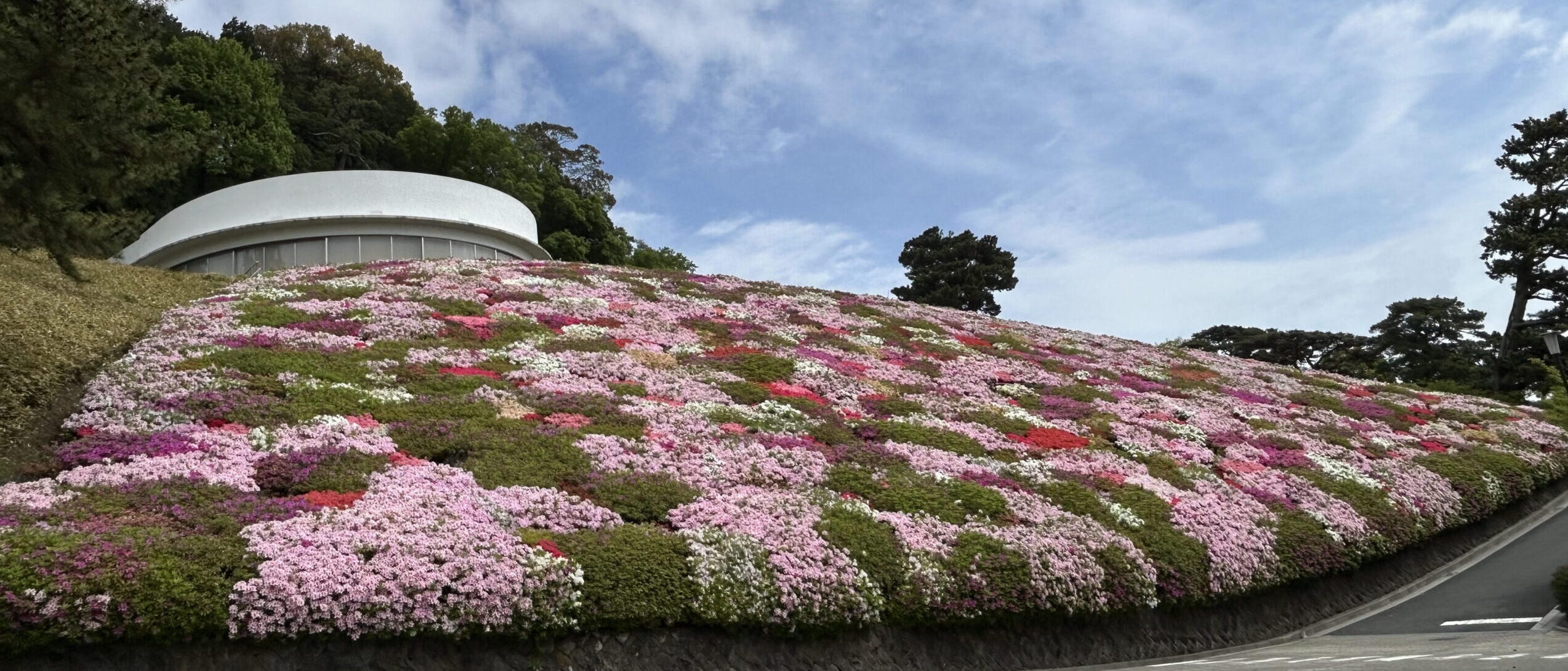



Recently, I visited Esashi-Fujiwara Heritage Park in Iwate, a historical park that recreates buildings from Japan’s Heian period. It is often used as a set for period dramas.
There, I heard about the fireflies. Around the park’s ponds and channels, they have been increasing year by year. Both Genji and Heike fireflies appear there — the same names as the two great warrior clans of that era. In the season, I was told, it is beautiful.
The park is now over 30 years old. I think it shows what happens when the waterside is cared for, year after year. In Silent Spring, Rachel Carson imagined a spring with no birdsong. What I heard about here was the opposite: summer nights full of light.
In 1962, an American biologist named Rachel Carson published Silent Spring, a book about the dangers of pesticides. It is often credited with starting the modern environmental movement in America.
But more than ten years earlier, a Japanese thinker had already warned about insecticides. His concern was not the birds. It was the soil.
His name was Mokichi Okada.
Who Was Rachel Carson?
Rachel Carson was born in 1907, the daughter of a farmer in Springdale, Pennsylvania. She studied zoology and became a marine biologist.
In 1936, she joined the U.S. Bureau of Fisheries, and she worked in the government’s fish and wildlife service until 1952. Her 1951 book, The Sea Around Us, made her famous. That was the same year Okada published his short book on natural farming.
She wrote Silent Spring while fighting cancer. She died in 1964, less than two years after it came out.
What Silent Spring Warned
After World War II, DDT and other new pesticides came into wide use in America, sometimes sprayed from planes over large areas. Carson warned that this careless use was harming birds, fish and other wildlife, and that the chemicals could build up inside living things.
The book opens with a short fable: spring comes to a town, but no birds sing and no bees hum.
She also warned that the war on insects could backfire. When pesticides are overused, insects become resistant to them. Our efforts end up making them stronger.
Carson did not call for a ban on all pesticides. She called for care, and she closed the book by urging a different approach, one that works with living things to keep pests in check.
The book’s impact was enormous. In 1963, a science advisory committee to President Kennedy largely backed her findings. In 1970, the U.S. Environmental Protection Agency was founded, and in 1972 it banned DDT for nearly all uses in the United States.
A Warning from Japan
Japan, too, had taken up DDT after the war. It worked well against insects that attack rice, and Japanese companies began producing it in 1947.
Okada was already warning about insecticides by 1949. People were so busy killing pests, he wrote, that they never looked for the cause. Even when insecticides got rid of the pests, people did not yet understand that the chemicals seeped into the soil, damaged it, and became a cause of pests themselves.
In January 1951, he explained this more fully in a short book on natural farming. One chapter dealt with insect damage. Farmers at the time, he wrote, had three big worries: the high cost of fertilizer, insect damage, and damage from storms and floods.
His explanation of pests began with the soil. Fertilizer, he wrote, pollutes the soil. The soil changes, loses its natural ability, and is left with impurities. Anything unclean is bound to decay, and there small insects and bacteria appear, just as maggots appear in a manure pit. Different fertilizers bring different pests, and new fertilizers bring new ones.
Then he turned to insecticides. Spraying them to get rid of pests, he wrote, is very bad. A poison strong enough to kill insects seeps into the soil and turns it into poor soil. Plants grown there take in this poison on top of the fertilizer. The soil grows weaker still and, like a weakened person, loses its resistance. The pests seize the chance and multiply all the more.
He called it an endless game of cat and mouse.
He kept coming back to the point. In a talk in October 1953, a year of poor rice harvests, he pointed to a recent newsreel: people spraying disinfectants and insecticides heavily, and a scramble for more when supplies ran short. The more they did that, he said, the more it would backfire.
Same Worry, Different Roots
Okada died in 1955, seven years before Silent Spring came out. As far as we know, neither of them knew of the other’s work.
Yet they arrived at a similar warning: when we fight insects with poison, the problem comes back worse.
They found the reason in different places. Carson looked at the web of life: the birds and fish harmed by the chemicals, and the insects that learned to survive them. Okada looked down at the soil. For him, pests were a sign that the soil had lost its health, and insecticides only weakened it further.
Their answers differed, too. Carson urged an approach that works with living things. Okada’s answer was to stop poisoning the soil altogether: no fertilizer, and no insecticides. Healthy crops, he wrote in 1953, have the strength to overcome small pests on their own. It is fertilizer that leaves them too weak to fight back.
Who Was Mokichi Okada?
Mokichi Okada (1882–1955) is known today for a farming method that uses no fertilizer at all, and for a large body of writing on health, art, and how people ought to live. He began growing crops without fertilizer in the mid-1930s.
If Silent Spring made you think twice about pesticides, his chapter on insect damage is a good place to go next.
Read Next
👉Why Pesticides Are Making the Problem Worse (Okada’s chapter on insect damage, in English)

Read the Original
Okada’s 1951 chapter on insect damage, written in Japanese, is available on meshiya.jp.

Natural Farming Series — All Articles
- Modern Farming Is Losing Its Balance
- The Soil’s Secret Strength
- Why Pesticides Are Making the Problem Worse
- When Floods and Typhoons Hit, Some Farms Survive. What’s Their Secret?
- Why Do Parasites Thrive — And What Does Our Food Have to Do With It?
- Can an Ancient Japanese Practice Help Crops Grow Better?
- Why Your Home Garden Isn’t Thriving
- The Quiet Revolution