

Okada saw a human being as something that should become a work of art. I find that a remarkable way of looking at people.
The other day, I picked some of the edamame (green soybeans) growing in my garden. Here in Tohoku, the cold northeast of Japan, most people grow early-ripening varieties. This year, I tried a late-ripening one from natural farming seed. It didn’t really suit our climate, so I didn’t get many pods. But the taste was incredible. The lively look of the plants, and that flavor. This, I felt, is what he meant by “the art of farming.”
When you hear the word “art,” what comes to mind? Maybe a painting in a museum, a good novel, or a concert. For most of us, art is something we go to see or hear, and then we go home.
In 1950, the Japanese thinker Mokichi Okada (1882–1955) wrote a short essay that looks at art in a much bigger way.
He often said, “Heaven is a world of art.” But he admitted that this phrase alone was too vague. Of course, it is good for fine art, literature, and the performing arts to flourish. Still, he wrote, a world cannot truly be called heaven until every kind of art is there. In fact, everything has to become art.
The Essence of Art: Truth, Goodness, and Beauty
So what makes something art? Okada’s answer was simple. Real art must meet three conditions: truth, goodness, and beauty.
Then he gave an unexpected example. Healing illness, he said, is also a fine art. He called it the art of life. To explain why, he went through the three conditions one by one.
Truth: A Body That Can Do Its Work
First, truth. Okada believed that the true state of a human being is to be healthy. When we lose our health, we are no longer living the way people are meant to live.
He compared this to an everyday object, like a bowl or a jar. If it is damaged somewhere, it can no longer do its job. It leaks water. It tips over when you set it down. It breaks when you try to use it. An object like that has lost its “truth,” so we mend it to make it useful again.
People are the same, he said. When illness keeps us from doing our work as human beings, we need to get back to our true, healthy state.
Goodness: More Than Just Doing Harm
Next, goodness. A person who has no goodness and only does harm, Okada wrote, is not a true human being either.
Beauty: No Explanation Needed
Last comes beauty. Here Okada kept it short. Beauty, he said, is so obvious that it needs no explanation.
From all this, he concluded that making truth, goodness, and beauty real is the basic condition for turning this world into heaven.
Healing, Farming, and Beauty Working Together
That is why, Okada wrote, healing illness and changing the way we farm are both, of course, art. The first is the art of life. The second is the art of farming. For Okada, changing the way we farm meant his natural farming method. And creating a model of heaven on earth is the art of beauty.
When these three come together, he said, a bright world of truth, goodness, and beauty will be built. That, for him, was what heaven on earth would look like.
In this view, art is not only something we look at in a museum. A healthy life, a good heart, and the way we grow our food can all be art.
Who Was Mokichi Okada?
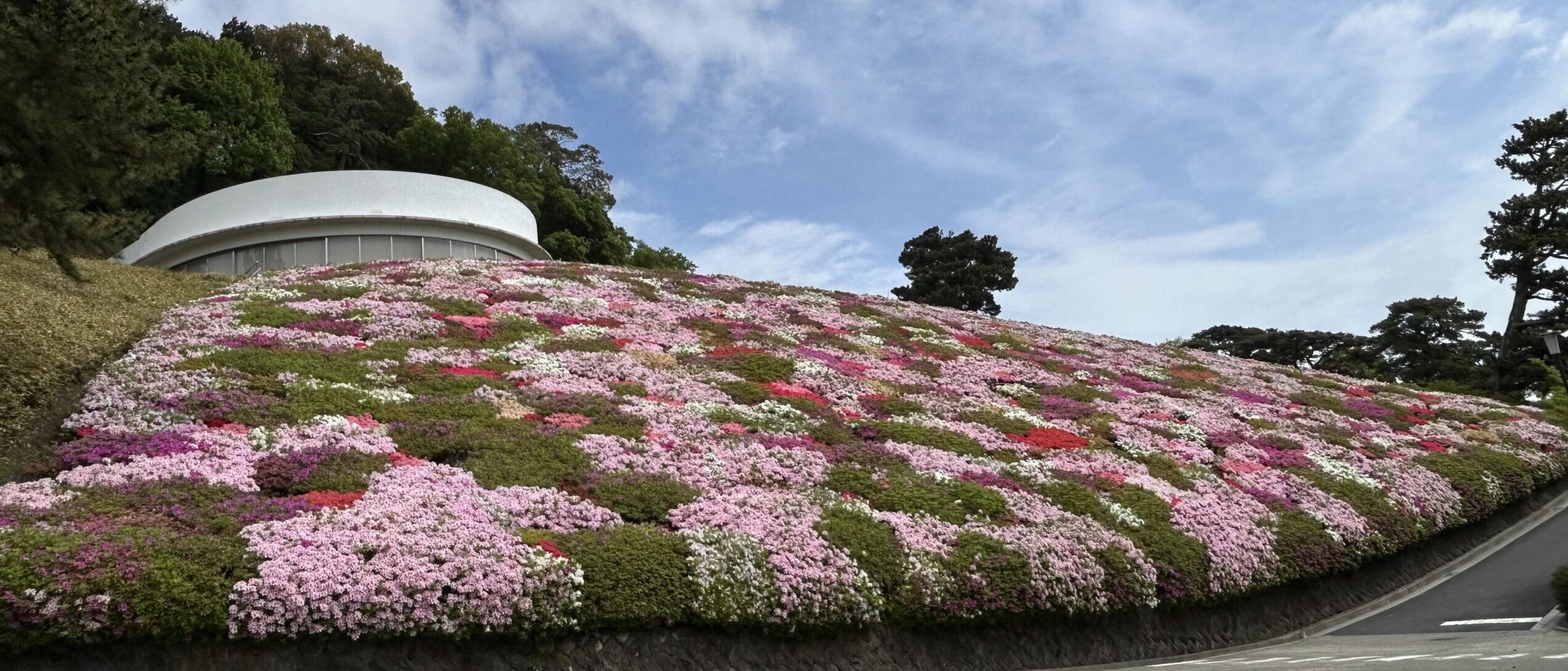
Mokichi Okada (1882–1955) is known today for a farming method that uses no fertilizer at all, and for a large body of writing on health, art, and how people ought to live. In 1952, he opened the Hakone Museum of Art.
Read the Original
The full text, written by Okada in Japanese in 1950, is available on meshiya.jp.
